Pet water cremation, also known as aquamation, is an alternative to traditional pet flame cremation. It uses water, warmth and an alkaline solution to gently accelerate the natural process that occurs after death.
A different way to say goodbye
For families saying goodbye to a much-loved pet, it offers another option for their companion’s final journey.
At Paws to Heaven, we provide individual pet water cremation for pets throughout Greater Brisbane, treating every animal with care, dignity and respect.

Dignified, individual care
Every loyal, beloved pet deserves individual care, kindness and respect.

Gentle & natural process
A gentle, respectful alternative to traditional flame cremation.

Environmentally responsible
A more sustainable choice that helps reduce environmental impact.
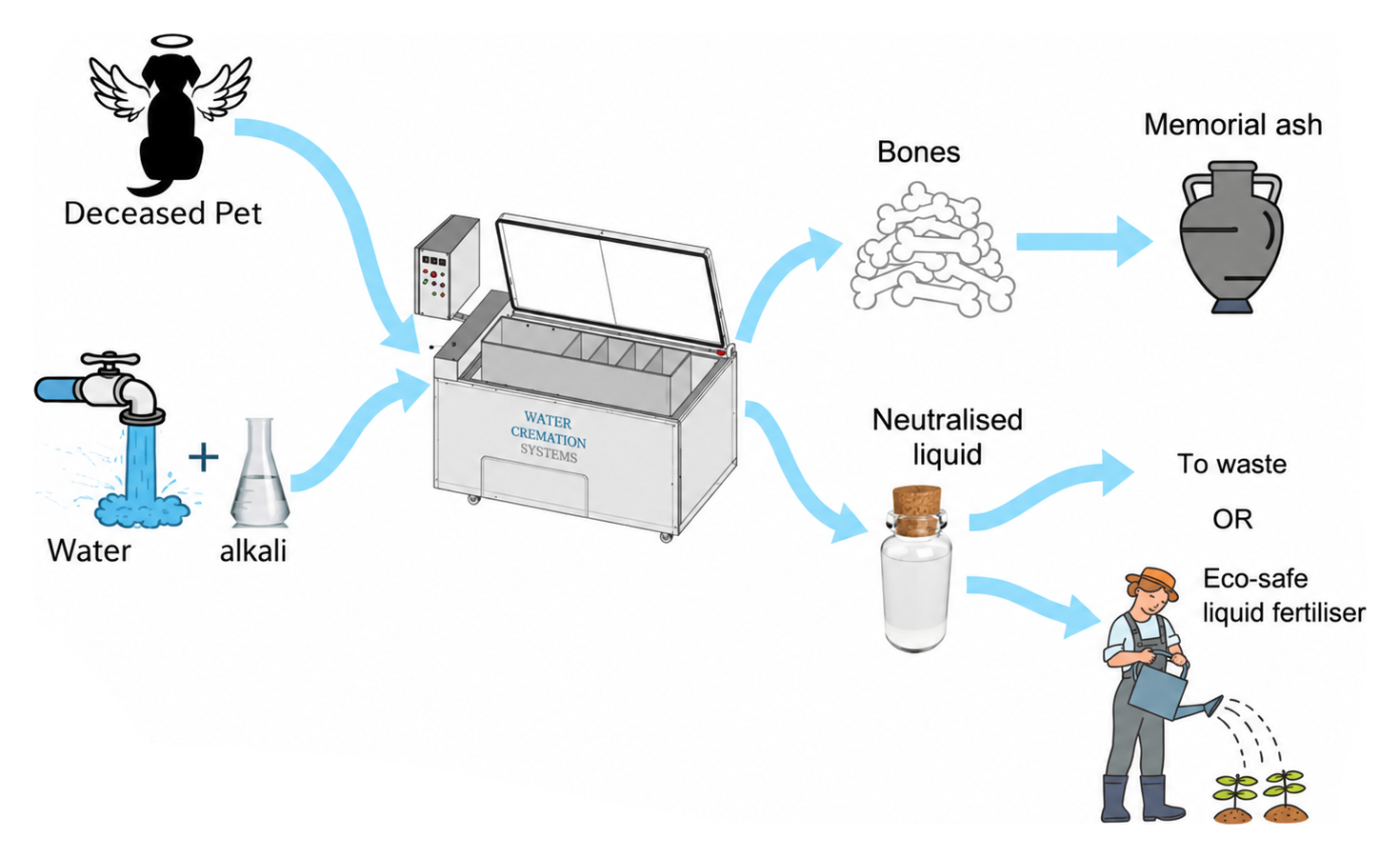
How pet water cremation works
Pet water cremation uses a combination of water, warmth and an alkaline solution to break down soft tissue over time. The process accelerates natural decomposition in a controlled environment.
Once the process is complete, the remaining bone material is carefully processed into a fine, ash-like powder that can be returned to the family, depending on the service selected.
Although the process differs from flame cremation, both methods allow families to receive a lasting memorial of their much-loved companion.
Water cremation vs flame cremation
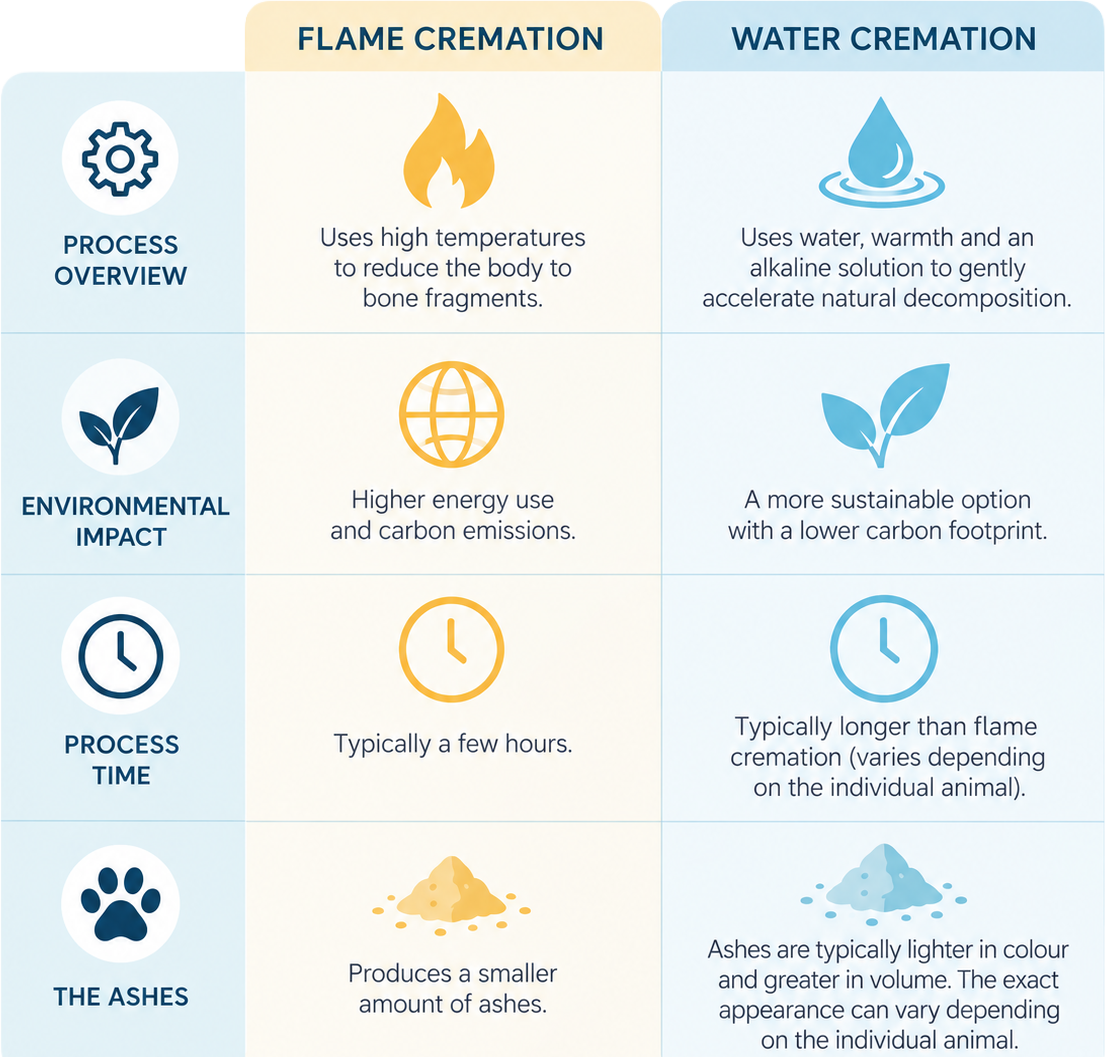
Both water cremation and flame cremation provide a way to care for a pet after death. The main difference is how the process takes place.
Water cremation uses water, warmth and an alkaline solution to accelerate natural decomposition.
Flame cremation uses high temperatures to reduce the body to bone fragments, which are then processed into the ashes returned to the family.
Water cremation is often chosen by families looking for an alternative to flame cremation. Its water-based process also has a different environmental profile, although the overall impact depends on factors such as the equipment, energy source and operating practices.
There is no single right choice for every family. What matters is finding an option that feels appropriate for you and your pet.
Please remember our caring and understanding team are happy to take your call day or night, 7 days a week.
Frequently asked questions
1. What are the ashes like?
The mineral remains from water cremation are generally lighter in colour and finer in texture than those produced by flame cremation. The amount and appearance can vary depending on the individual animal and the process.
These remains can be kept in an urn, placed in a memorial item or scattered in a meaningful location, subject to any relevant local requirements.
2. What happens if I don’t want the ashes returned?
Some families prefer not to have their pet’s ashes returned, and that’s completely understandable. Paws to Heaven offers a water cremation option without ashes returned. Your pet is cared for individually, and the ashes are scattered on your behalf in our memorial gardens.
For package details and pricing, please visit our Pet Water Cremation service page.
3. Is water cremation individual?
Yes. At Paws to Heaven, each pet receives an individual water cremation. Your pet is identified throughout the process, and the resulting mineral remains are processed separately before being returned to you.
For more information about identification, collection and the return of ashes, see our Pet Water Cremation service page.
4. Which pets can have water cremation?
Water cremation is available for a range of companion animals, including dogs, cats and smaller pets such as birds, guinea pigs, rats, mice, reptiles, amphibians and fish.
Our miniature pet package is intended for pets weighing less than 1kg. If your pet is an unusual species or is outside the usual weight range, please contact us to discuss the available options.
5. How long does the process take?
The water cremation process itself takes approximately eight hours, depending on the size of the animal.
The full aftercare process takes longer because it includes collection, identification, preparation, processing and arranging the return of your pet’s ashes. At Paws to Heaven, please allow 10-14 working days for the return of ashes after your pet comes into our care. Personalised memorial items may take longer.
6. Do you offer collection from home or vet clinics?
Yes. We can arrange collection from your home or veterinary clinic across Brisbane and surrounding areas.
If your pet has passed away at home or has been euthanised at a veterinary clinic, contact us and we can guide you through the next steps. Visit our Pet Water Cremation service page for more information about arranging collection and aftercare.
7. What memorial options are available?
We offer a range of ways to remember your pet, including urns, memorial boxes, photo frames, jewellery, personalised keepsakes and outdoor plaques.
Depending on the package chosen, keepsakes may also include a paw print, a lock of fur and a memorial certificate. You can explore the available options on our Specialty Urns, Keepsakes and Jewellery page.
8. How do I arrange pet water cremation?
You can arrange water cremation by selecting a package on our Pet Water Cremation service page. The booking process asks for information such as your pet’s size and collection requirements, and allows you to choose a suitable memorial option.
If you’re unsure what to choose or need help with the arrangements, please contact us. We are available by phone 24 hours a day, seven days a week.
9. How does water cremation differ from flame cremation?
Flame cremation uses combustion, while water cremation uses water, warmth and alkalinity to accelerate the natural breakdown of soft tissue. Both processes leave mineral remains from the bones that can be returned to the family.
Water cremation avoids burning the body and has a different environmental profile from flame cremation. The precise environmental impact depends on the equipment, energy source and how the process is managed.
10. Is water cremation a new process, and what are its environmental benefits?
Water cremation, also known as alkaline hydrolysis or aquamation, is a newer aftercare option in Australia, but the underlying technology has been used for many years in other applications.
Because it does not use flame combustion, water cremation can reduce energy use and direct combustion emissions compared with flame cremation. Exact comparisons depend on the equipment and operating conditions, so we avoid making universal claims about percentages without supporting evidence.